Getting Started in Dimraeth
From the ritual to Earlwood without wasting XP, stamina, or a world you meant to keep.
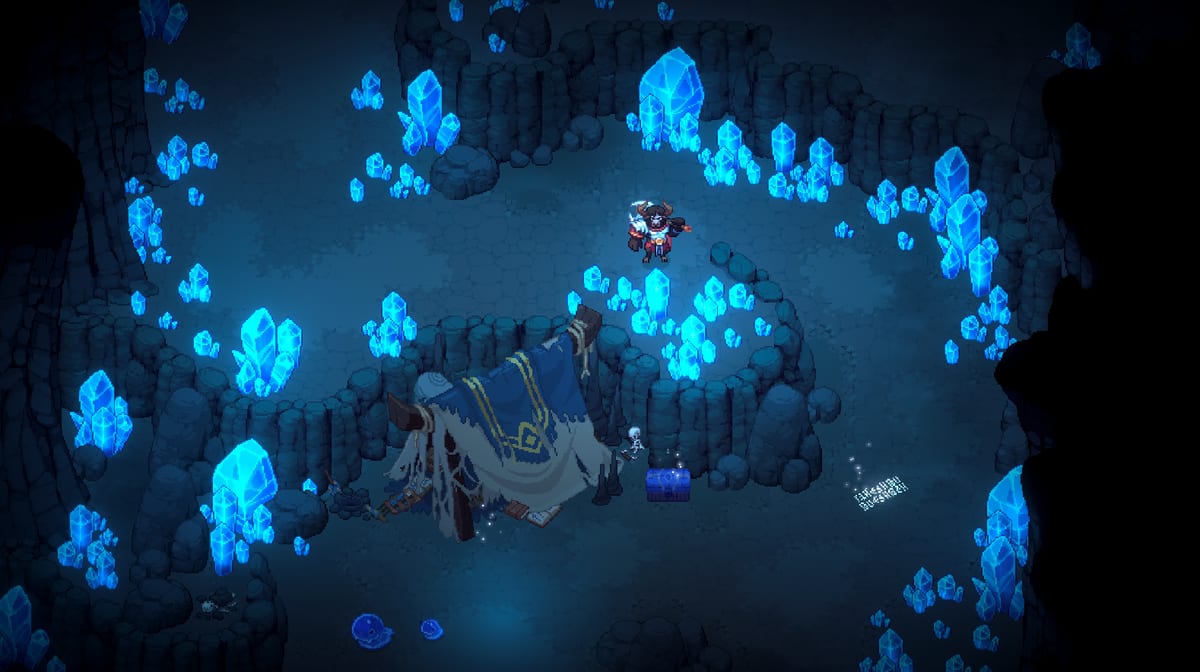
Dimraeth’s first hours are a funnel, not a speedrun. You wake after a broken ritual that granted immortality you do not understand. Faustas recruits you to stand with Mirkea’s free peoples against Sylbos, Last of the Ogre Magi, who wants the power site Dimraeth. Steam Early Access is dated 15 September 2026. The public demo closed 15 July 2026 after about 60,000 players and an 81% Very Positive Steam score. Treat this page as a day-one plan for that upcoming window, not as a recap of a finished 1.0 launch.
Before you create a hero, skim Character Creation and a starter build. Confirmed races are Minotaur, Human, Elf, and Fairy. Confirmed classes are Brawler, Magician, and Shadow. Elf and Shadow were named as Early Access additions on 2 September 2026; their kits are still thinner than Minotaur Brawler and Human Magician. Race is your base kit: a Minotaur stays a heavy axe frontliner even on a ranged-leaning class; a Fairy stays a staff caster even as a Brawler. Class layers spells and techniques on top. The pairing is an archetype with a unique tree and a unique passive. You are not picking a cosmetic skin.
Hour zero: meters and XP
Open Combat Systems in another tab. You manage health, stamina, and Concentration. Stamina pays for physical strikes and dodges. Concentration pays for spells and regenerates in combat when basic attacks land — casters who never swing will starve their own bar. The third hit in a string is a Final Attack. You equip five spells. Poise and stun exist: Blunt fills stun fastest. Status stacks include Burning, Chill, Poison, and Bleeding.
XP buys attributes, and the cost of each attribute is set by your race–class pairing. A Fairy Magician pays a premium for Strength; a Minotaur Brawler does not. If you dump XP into off-stats because a tooltip looked shiny, you finish the level cap with fewer total points. That is the single most expensive beginner mistake in Dimraeth. Spend into the attributes your tree, weapons, and spellbooks actually gate. Revisit the pairing on the archetype planner if you are unsure.
Set input before the first cave. Controls and Input covers keyboard and mouse, gamepad, a WASD-plus-mouse hybrid, and Steam Deck. Confirm your PC against system requirements if you are on integrated graphics.
Lost Caverns
The documented starter spine is Lost Caverns → Earlwood Village → Wildwood Forest. The caverns teach commitment: attacks have start-up, dodges cost stamina, and telegraphs are meant to be read. Do not empty stamina on the first two hits and then panic-dodge through a third. Leave room for the Final Attack or for a spell that Concentration can actually afford.
Loot is input, not a score. Pick up materials you will later spend in Faustas’s stronghold. Equipment has rarity tiers and upgrades; you do not need a perfect drop in the first cave. If a fight feels like a wall, it may be a named encounter — check Boss Fights before you burn consumables on a random elite.
Earlwood Village
Earlwood is the first town that makes the social layer real. Befr keeps a caravan here and sells goods with more cheer than the forest deserves. Manga, an exiled Minotaur blacksmith guided by Praesidiism, works metal and talks protection instead of conquest. Eldorian, a young Elf, splits time between forest and Guild Hall with spear and spell. Tamsin, an enchanter from Aldoria, works banners and quiet tunes. Alaric Audet is the folk hero the land already knows. Myrll lingers at the forest edge — doe legs, fox tail, exile written into the silhouette.
Talk to people before you sprint into Wildwood. Deeds are short quests; they teach systems and introduce allies. Romance and personal quests exist, but they live in this world. If you are hopping between hosts, read Co-op Play first: recruited NPCs stay in the world where you recruited them. Do not assume your friend’s Manga is your Manga.
Wildwood Forest
Wildwood is where the starter region stops holding your hand. Corruption is not flavor text; it is why you are here. Demo footage shows a dryad-related quest tied to building, and bosses such as the Corrupted Treant. Treat the forest as a stamina exam plus a gathering run. Return to the stronghold to craft, cook meals that raise vitality, brew potions, and plant farms. The loop is explore → fight → gather → build → level → group up, not a linear dungeon crawler that never lets you go home.
Bounties are repeatable bosses. Use them to practice a five-spell rotation, not as a substitute for Deeds. After Wildwood, the 2 September 2026 post names an expanded Wildwood and the Goblin Caves as Early Access geography — details sit on the map. If you want a ranking of early pairings, open the Tier List Hub after you have actually swung a weapon — lists without meter sense are just posters. The paid build’s level cap is 25, raised with each new act; do not dump XP as if the cap were infinite.
Co-op in the first hours
You can play the entire spine solo. If friends drop in, one of you hosts on peer-to-peer. Your level and bags travel; Earlwood’s story and buildings do not. Host on the machine with the steadiest connection. There is no dedicated server to rent and no split-screen on the couch. Find people on Discord looking-for-group. File bugs in #bug-reports.
A practical first-session checklist
- Pick a confirmed race and class you are willing to main for dozens of hours. Minotaur Brawler (Vanguard) is the documented frontline example; Human Magician is the documented weapon-plus-element example.
- Put XP into on-stat attributes only until you understand spellbook gates.
- Slot five spells you can press under pressure, not five you thought looked rare.
- Clear Lost Caverns without emptying stamina on every pack.
- In Earlwood, meet Befr and Manga, then take a Deed before a Bounty.
- Build something in Faustas’s stronghold before you vanish into Wildwood for two hours.
- If you join a friend, write down whose world owns the story.
For a region-by-region route after this hour-zero plan, open the starter walkthrough. For bags and books, open Items and Spellbooks.
The Game Mojo footage on this page is a look at how the isometric combat reads in motion. Use it to calibrate camera, spacing, and how long a swing actually takes — then come back and spend XP like it is scarce. Your first hours should leave you with a clean attribute plan, a spell bar you trust, and a world you intend to keep. If you get lost, the Guides Hub is the map; this page is the first hour on that map.
Frequently Asked Questions
Quick answers for Dimraeth players.
What is the first region in Dimraeth?
The documented starter spine is Lost Caverns, then Earlwood Village, then Wildwood Forest. Early Access will expand beyond those zones over an 18–24 month window.
Should I spend early XP on every attribute?
No. Attribute XP costs depend on race and class. Heavy off-stat spending means fewer total points at max level. Invest in stats your tree and spellbooks actually use.
Can I finish the first hours solo?
Yes. Solo is fully supported from start to finish. Co-op is optional 1–8 player online drop-in on a peer-to-peer host.
When does Early Access start?
15 September 2026 on Steam. The demo closed 15 July 2026. The price is planned to rise after day one as content is added.
Who should I talk to in Earlwood?
Befr the merchant, Manga the exiled Minotaur blacksmith, Eldorian, Tamsin, and later Alaric and Myrll. Recruited allies stay in that world.
What are Deeds and Bounties?
Deeds are short quests. Bounties are repeatable bosses. Use Deeds to learn the region and Bounties to practice combat once your rotation exists.